What The Earth Keeps Open

What The Earth Keeps Open
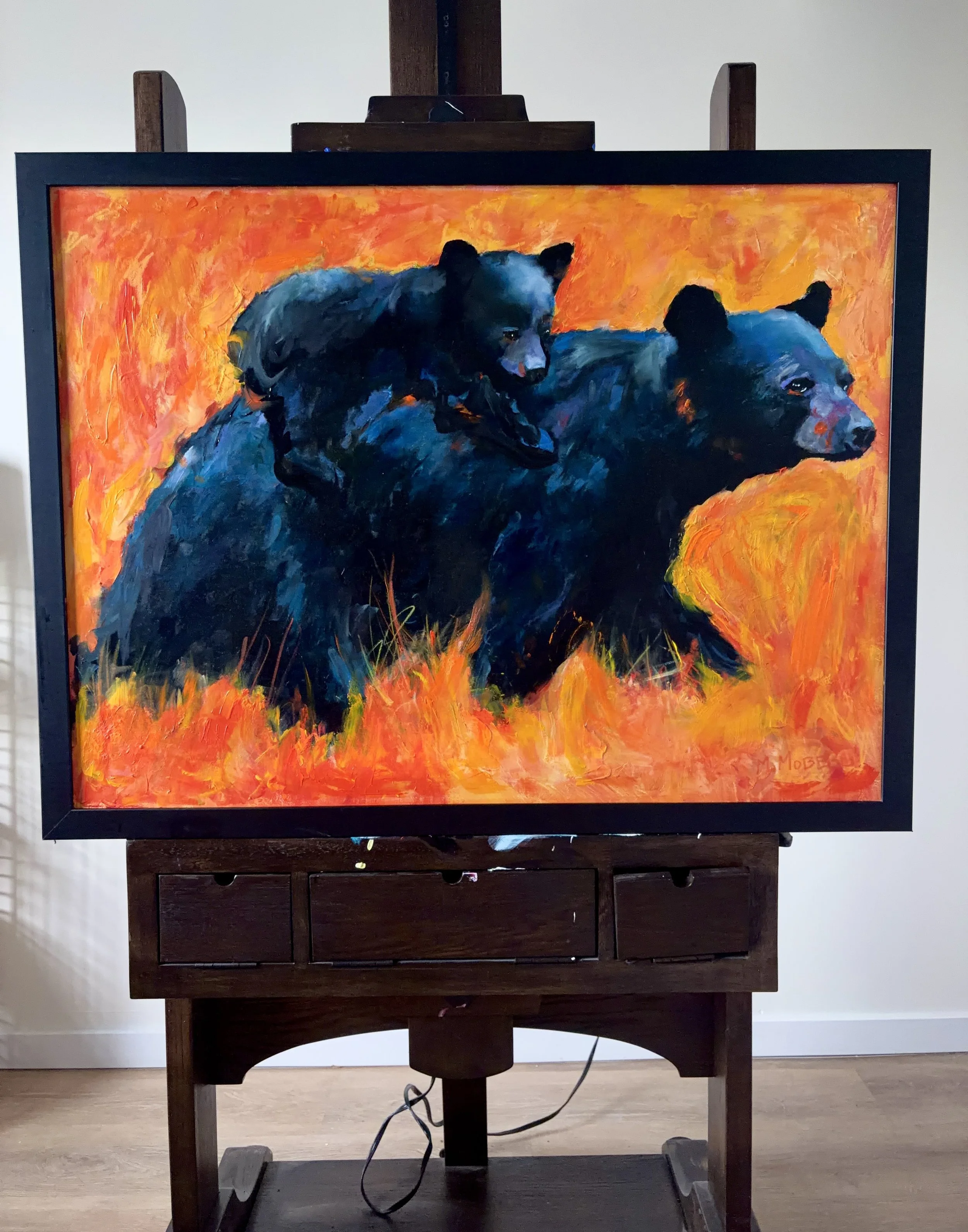
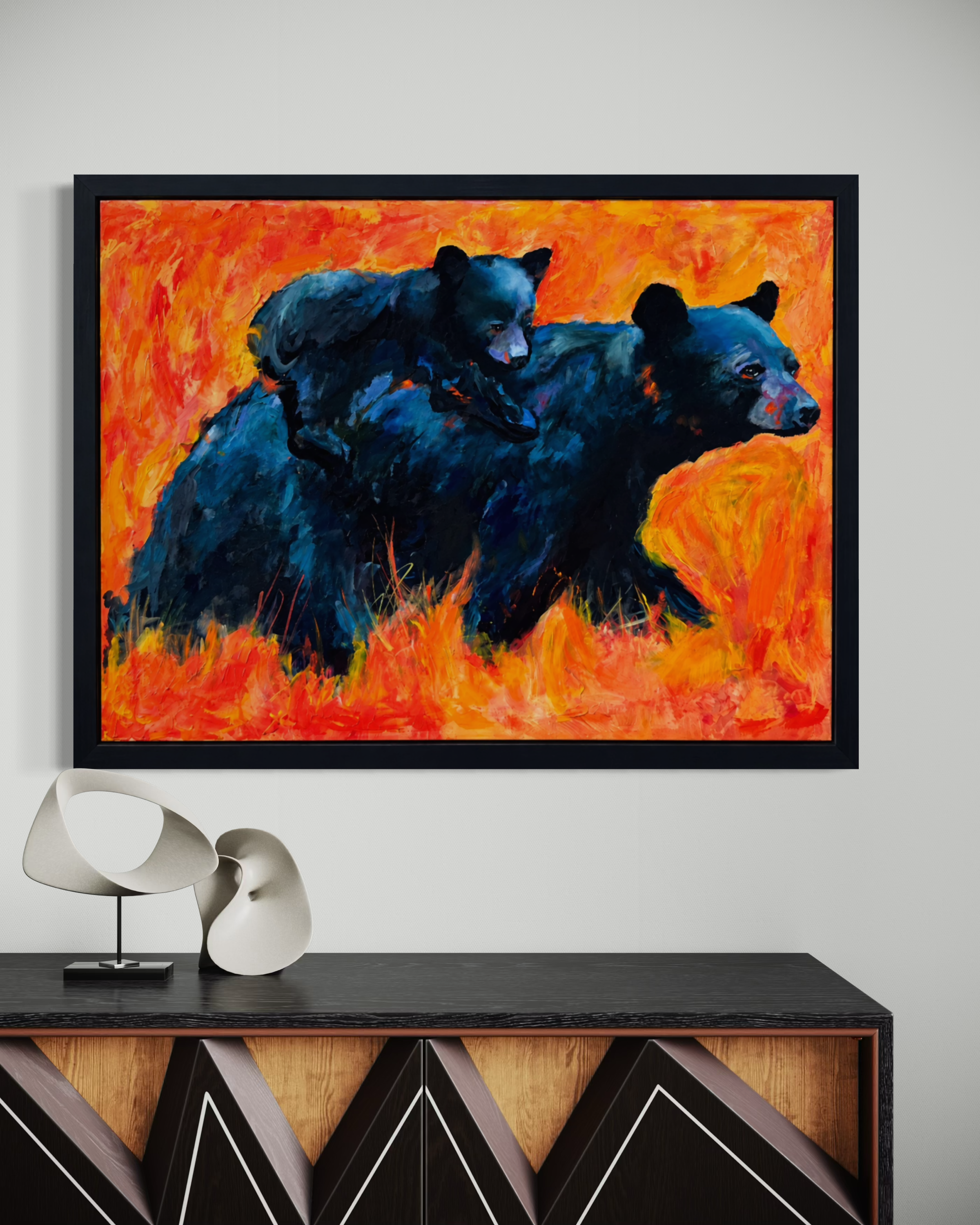
These bears came home.
That’s not a phrase a more seasoned or savvy artist would use
when a painting gets purchased and then unpurchased.
You should say something like “the sale fell through”,
or “the collector hit a rough patch”,
or something more suitably bloodless that allows everybody involved
to keep their clothes on emotionally.
But the truth is,
a man in Montana purchased these bears at an auction,
and then afterward became difficult to reach.
My calls landed in voicemail.
Emails went out and came back empty.
For a while, that was all I knew of him:
how he sounded before I said hello.
Then, a few weeks ago, he called.
It wasn’t FaceTime, but I could see him anyway.
You can hear when a man’s head is hung.
Some voices arrive looking down at their shoes.
He told me how much he loved the bears,
and how much he wanted to support my work
and wanted the bears,
but right after he won the auction,
his future took an expensive sharp turn
and the money had to go where the wanting couldn’t walk.
He said he meant to write,
and I know that heavy lift and why he didn’t.
Those messages can take forty-five minutes to type
and several days to get your thumb to click SEND.
They’re how you can tell the truth
and still have a little say in how you’re seen after you do.
He didn’t wanna be seen like this.
But then he called and let me see him like this.
I admired him for that, and I told him that too.
Not because I was trying to cushion the landing or be polite.
I meant it.
Because there are some sentences that weigh almost nothing
until you try to lift them out of your chest.
“I cannot afford this anymore” is one of them.
Especially for men. Especially for American men
who’ve been handed receipts since they were boys and told to call it a mirror.
Taught to translate our worth into square footage,
the reliability of the truck,
and whether the waiter returns the card with a pen
or a lowered voice.
I offered to send him the bears anyway. No charge.
But he said no. Said he couldn’t.
I wanted the painting on his wall.
He wanted the money in my hands.
We kept holding out what the other wouldn’t take.
There should be a word for two men trying to give each other something
and finding their own hands impossible to open.
Neither of us had much practice setting down our end of the rope.
I don’t know if I’ll hear from him again.
But I hear him in myself now—
especially when my voice puts on its good jacket
and stands at the door as the smiling host
of a house I don’t want anybody in.
Doing great.
Keeping busy.
You know how it is.
It’s that old instinct to keep the river audible
after the water has gone dry.
This is how scarcity can get to a name.
A number falls and we start lowering ourselves to match it.
A bad month finds one loose screw
and suddenly a whole life is under inspection.
And we help it happen.
We build men out of iron beams and sixty-hour work weeks.
We raise boys to bring in the wood and make sure it’s enough for everybody.
We admire their shoulders and the beautiful stack by the door.
But then the winter goes long and the pile goes down.
And when a man starts quietly taking himself apart for kindling,
we say he’s been working awfully hard. We say he ought to get some rest.
But we keep holding our hands toward the heat.
And somewhere in the doorway
there’s a boy watching the warmth
and learning what it costs to be welcome.
Nobody remembers the teacher,
but most men recall early what was taught:
That a boy is a small economy with a wild heart.
That his goodness can be audited.
That love is something he proves by producing.
That the lights staying on are not merely the lights staying on
but evidence that he deserves to sit at the table beneath them.
And it works, until the money gets thin
and suddenly that boy is twelve again,
watching his dad’s face for the small change that means he did well.
All the years between fold shut and the scarcity finds
every locker room, every paycheck, every quiet comparison.
It finds the first fear: What if my usefulness was the whole thing?
What if nobody was ever saving me a seat?
What if I’ve been purchasing it a little at a time?
What if the empty cupboard tells them who I really am?
I don’t know how a man learns to believe the chair is his,
but I know these bears are back
right as the bears up north are starting to leave.
They all leave without explaining their absence.
There isn’t a bear in any of the woods that stands outside the mouth of the den
anxiously trying to explain to the rest of the forest that
this is really more of a strategic sabbatical
and that the timing looks worse than it is.
They eat. They slow.
They find some dark place that the earth has kept open for them.
And then the enormous animal whose entire PR runs on strength,
quietly lies down.
February doesn’t require an apology for February.
The bear has no July photograph he keeps turning facedown.
There is the body,
and there is what this season asks of it.
The world can’t flower everywhere, all the time.
The seed spends winter inside its small, hard coat.
A bud keeps its leaves folded.
The orchard stands with empty hands above the fallen fruit.
The trees are dropping what made us stop the car and take a picture.
We praise the gold. Then rake it into bags.
And nobody calls any of this broken,
because we know this is what the living must do
to continue living with the time it’s been given.
Scarcity isn’t a departure from your story.
It’s how the green grows legs.
That’s what I want for both the man from Montana and me.
The ability to say “I have less”
and then let that sentence end before it comes after our names.
I want one difficult month to have its way with thirty numbered rooms,
knowing that it doesn’t get the whole house.
And if the boys we were come running,
arms already reaching to carry wood —
the one waiting for his dad,
the one pretending he hadn’t wanted to play,
the one counting quietly beneath the table —
pull out their chairs and let’m sit and see.
They’ve been waiting outside long enough.
Make it plain for them:
Here is the bill.
Here is when it’s due.
Here is what I have
and what I have is not enough.
“I can’t afford this.”
Say it and don’t clear your plate.
Stay seated beside the smaller fire and let it be smaller.
Let our hands be cold for a little while
without asking either of us to disappear into the stove.
“What The Earth Keeps Open”
40x30
Oil and Acrylic on Canvas