
George and the Georgians
George and the Georgians
Nobody on the television will track this market.
There’s no graph for it.
No analysts leaning over glowing screens
saying things like “the compassion index is up 3 points today.”
But, if you want to understand
how a city survives a hard season,
you should start in the kitchen
of an eighty-four-year-old widower
named George.
Of course you wouldn’t think to start there,
because George doesn’t use words like “economy.”
George uses a yellow legal pad
that sits on the table in front of the still pulled out chair
where his wife had sat for 37 winters.
The paper is soft from weeks of use.
The handwriting is slow, deliberate —
the kind that grew up believing
that if you wrote something down
you meant it.
On it George writes names.
Addresses. Apartment numbers.
Who needs rice.
Who can’t have peanuts.
Who has three kids now
because the cousin moved in last month.
Outside the winter is roughhousing.
The wind interrogates more than it blows,
rushing down the street like a cop looking for trouble.
But every Thursday morning
George sits at that table and begins the quiet work
of keeping a small corner of the world from falling apart.
He calls them one by one.
“Hey there. You still able to make the run today?”
“Two families in Phillips.”
“Can you grab diapers if you’re at Aldi?”
His voice carries that quiet authority of a man
who has buried the love of his life
and decided that sorrow won’t have the last word.
And everyone is in.
A mechanic who smells like motor oil.
A teacher who hasn’t slept deep since September.
A Grandma named Sue (that George is convinced keeps making eyes at him).
And a college kid with a borrowed and bruised Corolla
that coughs every time before it starts.
By noon, the invisible infrastructure of kindness is already moving.
Cars pulling into Aldi parking lots.
Shopping carts rattling across slush.
People doing complicated mathematics
with grocery lists and debit cards.
Rice. Beans. Eggs. Bananas if they look decent.
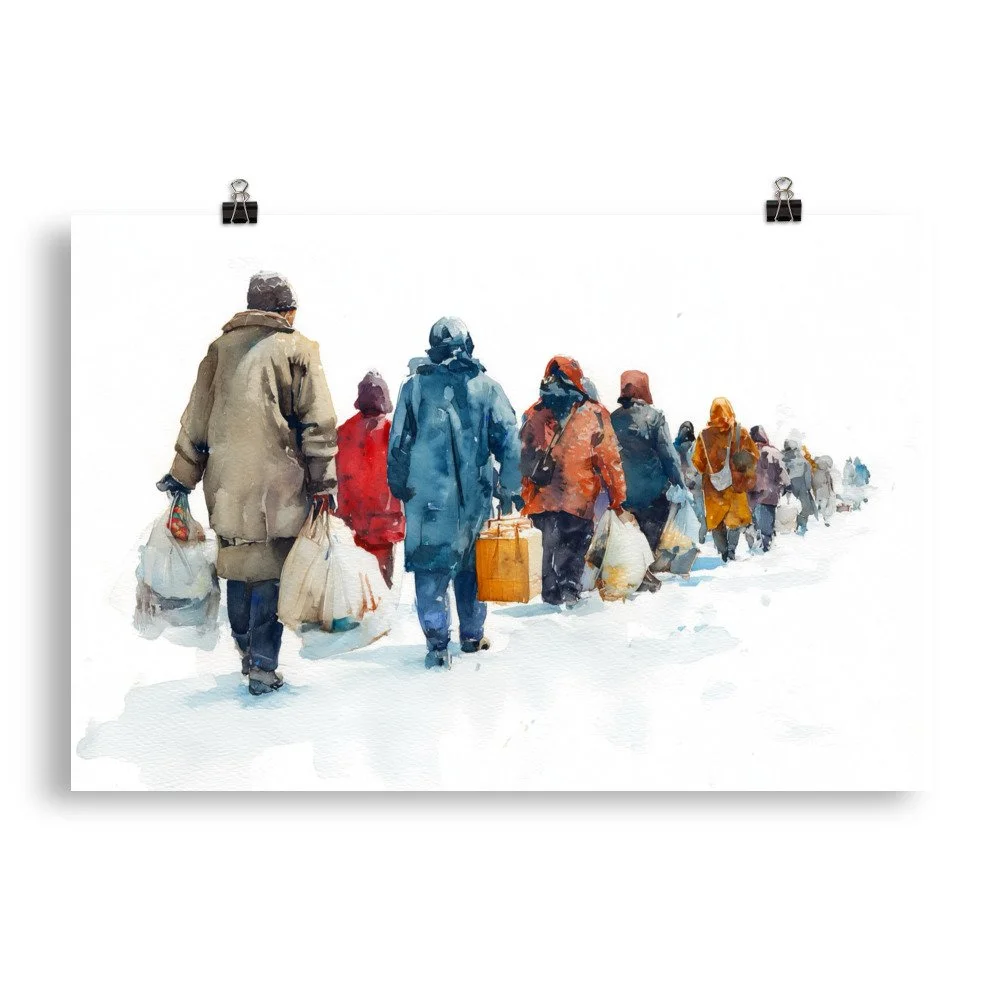
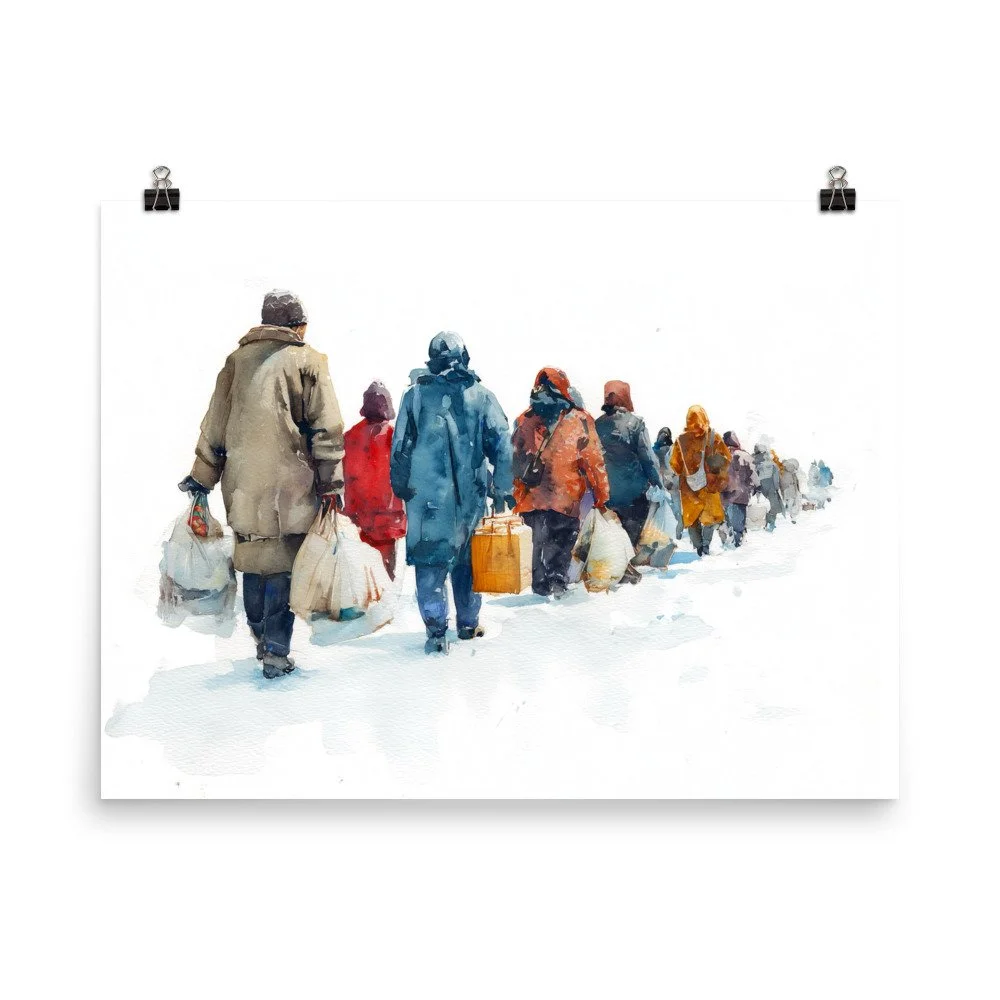
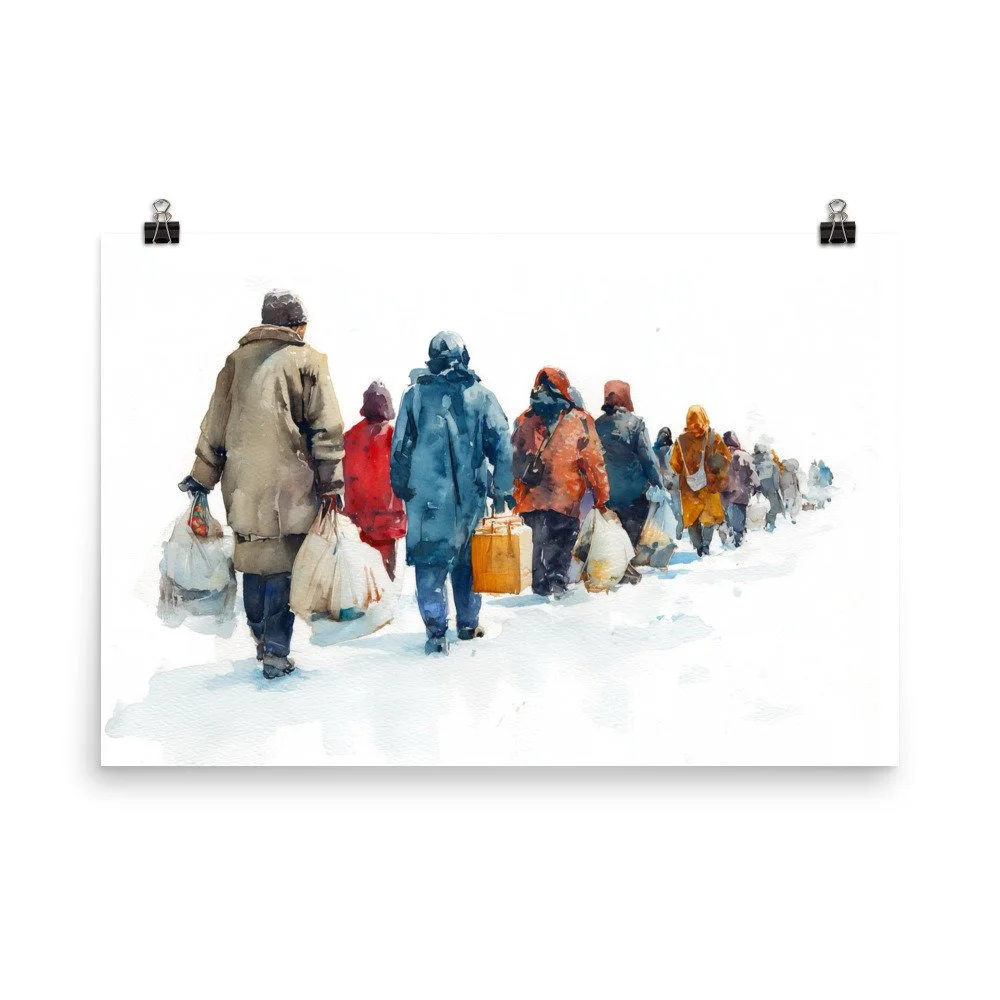
They carry the bags through a winter
that feels
like it has a personal grudge against human hands.
Plastic handles cutting small red half-moons into their fingers.
The wind arguing with them the whole way.
The economists will never study this system.
They cannot measure the tensile strength
of a plastic grocery bag cutting into an old man’s hands.
They cannot calculate the conversion rate
between a bag of rice and a mother sleeping
for the first time in three nights.
But every week,
George and the others —
the ones people have started calling the Georgians —
they show up.
And George is always with them.
Eighty-four years old and still refusing to outsource
the work of mercy.
He pulls on a coat that still carries
the faint ghost of his wife’s perfume
that she used to wear to church.
Zips it up to the chin.
Laces his boots that have seen better decades.
And starts walking, slower than the others,
but the bags in his hands don’t weigh any less.
Someone always tries to take the bags from him.
They tell him he doesn’t have to do it anymore,
and they say it gently like they’re offering him a way out.
George nods, and then lifts the bag anyways.
He knows
that grief is just love looking for somewhere else to go.
So he carries it door to door.
Across the ice.
Through the wind.
Up three flights of stairs where at the top,
somebody finally opens the door.
Inside the apartment the air smells like cumin and laundry soap.
George hands over the bags, with no speeches attached,
and a father in the corner exhales.
A child asks if the oranges are really for them.
A mother says thank you in the best English she can gather.
And George will wave it off like he always does.
“Just groceries,” he’ll say before heading back down the stairs
before kindness has time to become a performance.
And in a way, it is just groceries.
But if you could see the invisible ledger
where the true arithmetic of this city is kept
you would understand something.
In the official economy those groceries cost $74.27.
But in the economy George keeps
with pencil and yellow paper
they are worth:
one mother
unclenching her jaw for the first time this week.
one child
who doesn’t have to learn the sound a fridge makes when it opens to nothing.
one night
where nobody has to pretend they’re not hungry.
All
because one man
stubbornly refused
to participate in the empire’s favorite ritual
of always looking away.
If you ever find yourself wondering
what faith looks like when it’s stripped of ceremony,
you could do worse than picturing
an old widower
walking through a Minneapolis winter
with two bags of groceries
cutting into his two hands
as he climbs on two knees that always complain.
Of course George would just say it's the math of being alive.
You carry what you can.
You bring it to the door.
You write the next name on the pad.
And you stop waiting for the applause
before you decide to do it again.
This is the economy of Kindness.
• Paper thickness: 10.3 mil
• Paper weight: 189 g/m²
• Opacity: 94%
• ISO brightness: 104%
• Paper is sourced from Japan
This product is made especially for you as soon as you place an order, which is why it takes us a bit longer to deliver it to you. Making products on demand instead of in bulk helps reduce overproduction, so thank you for making thoughtful purchasing decisions!