
A Snowman for Sahra (Stories from the Surge)
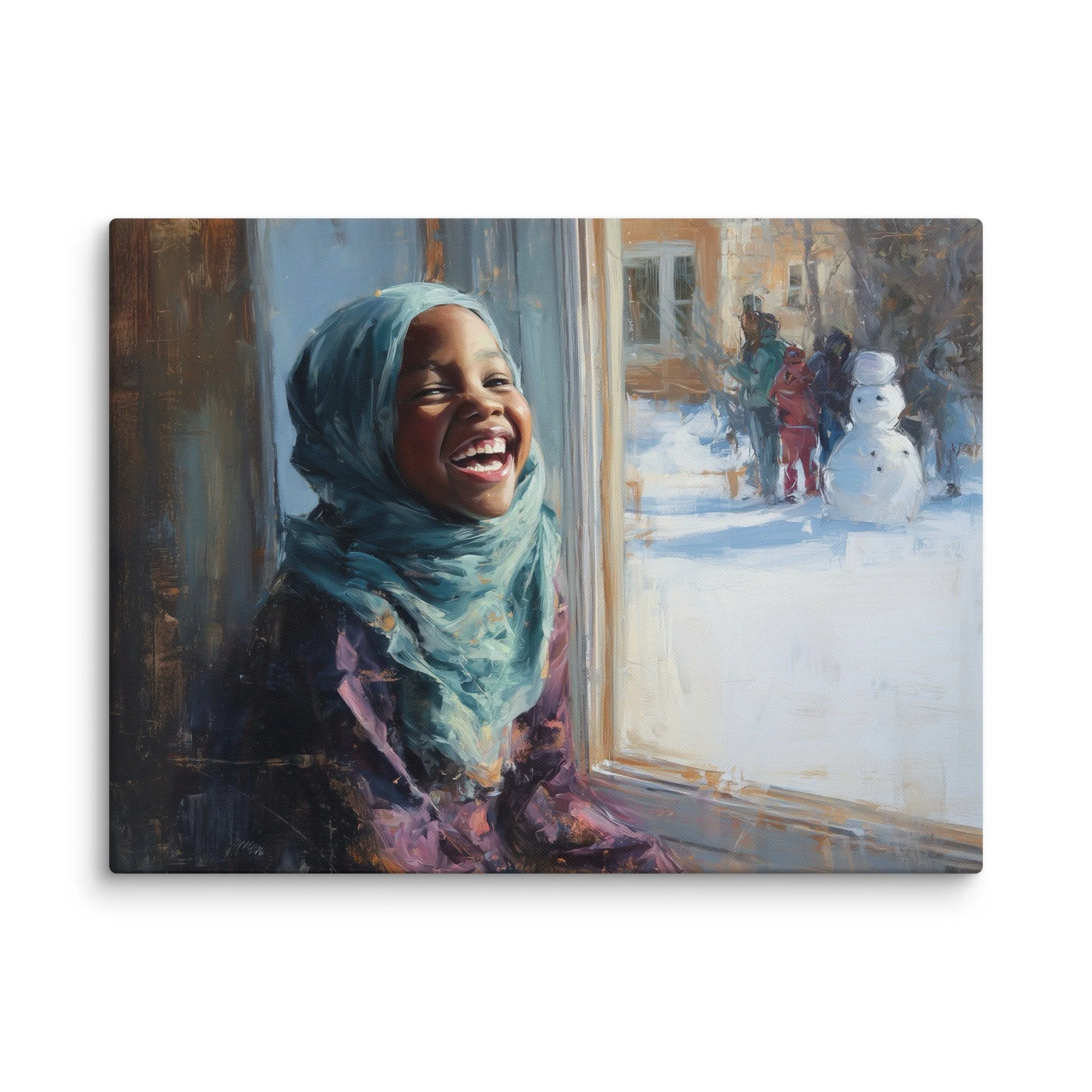
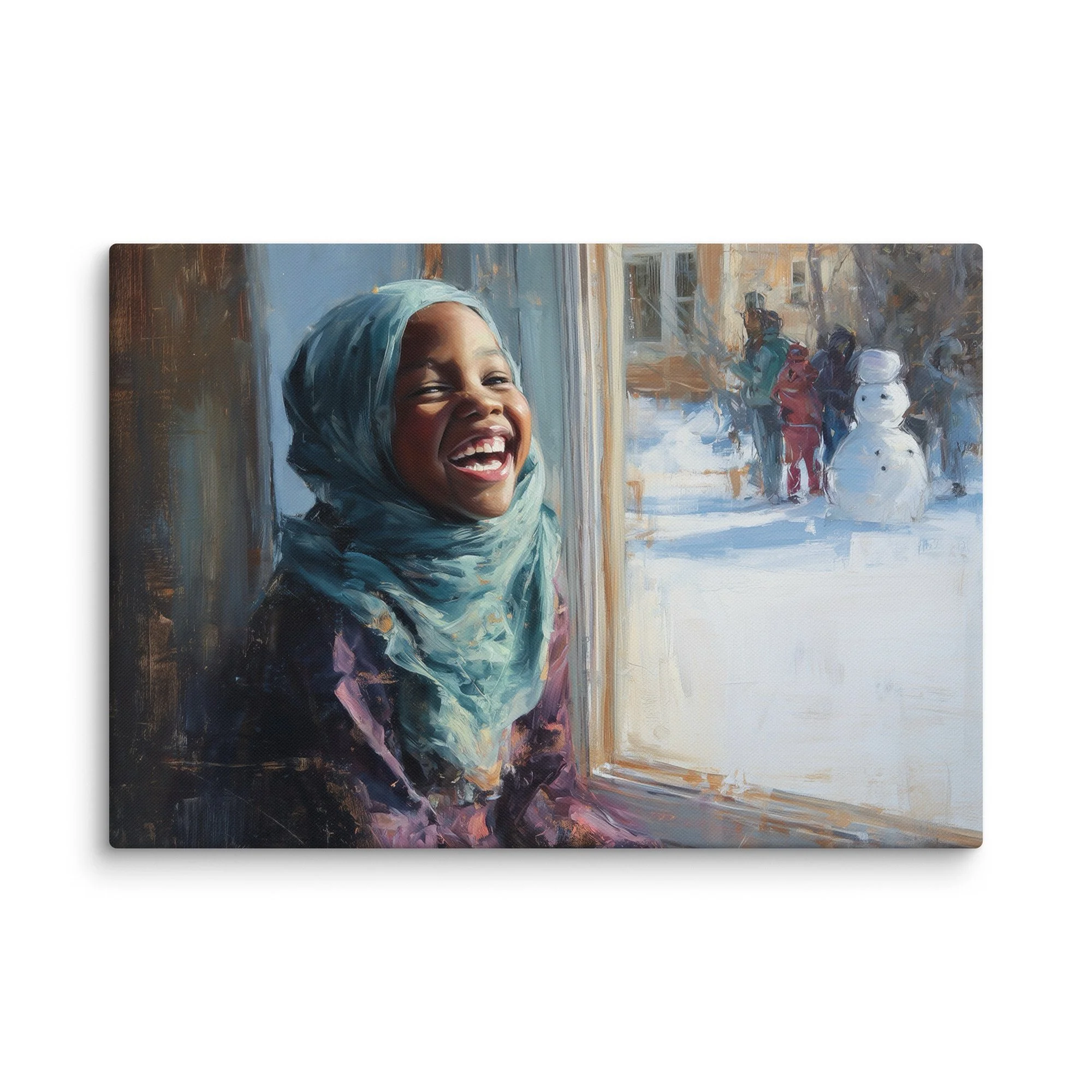
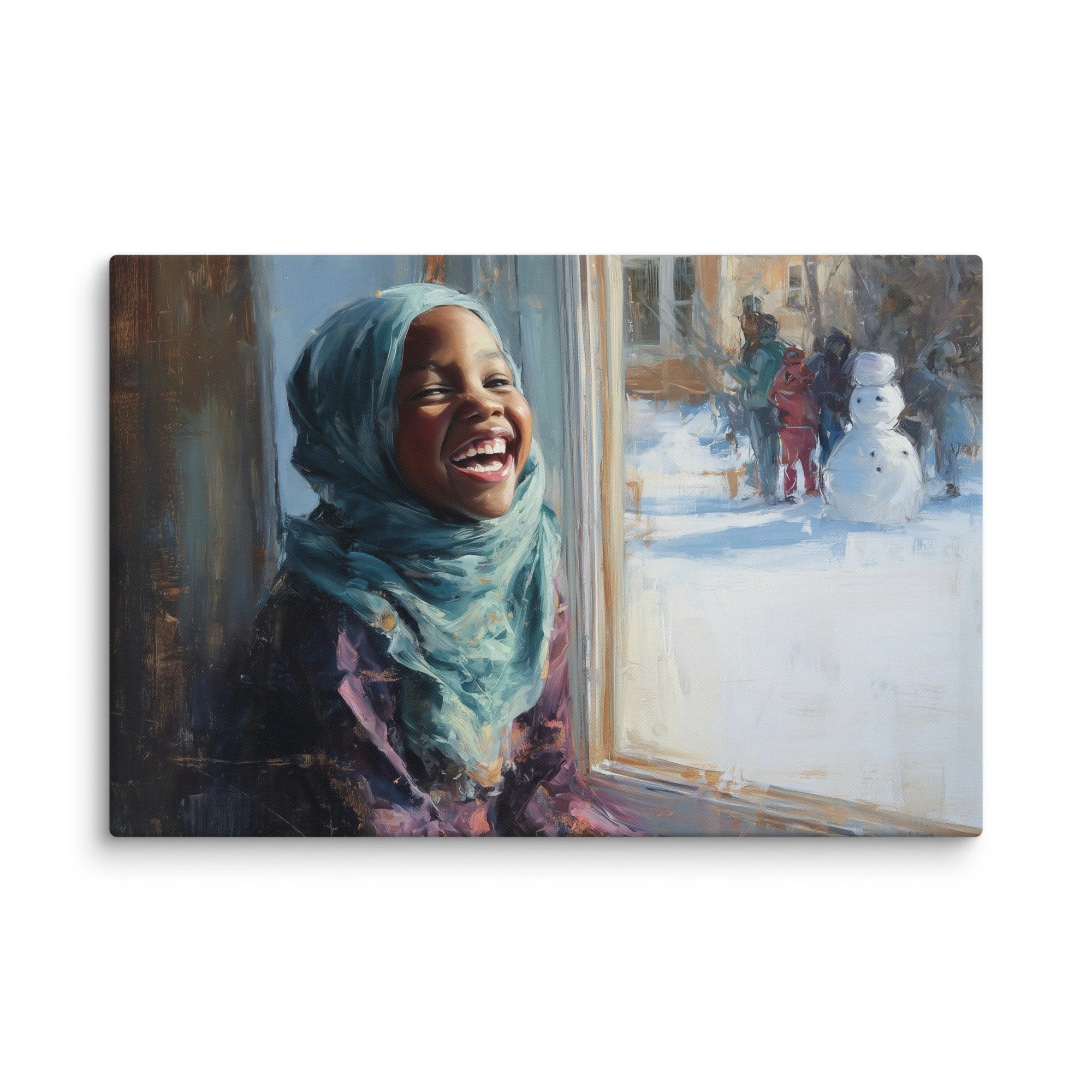
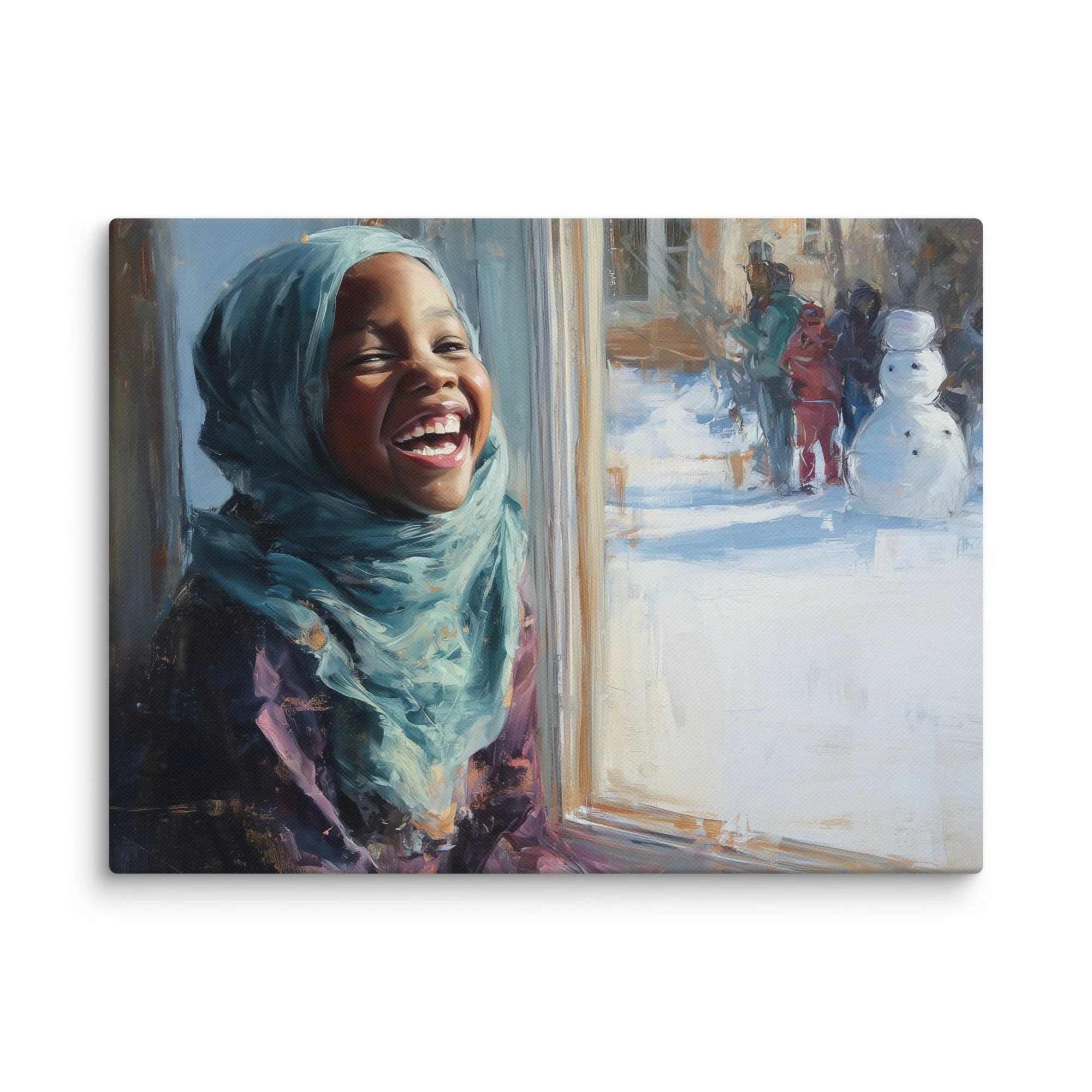
A Snowman for Sahra (Stories from the Surge)
On a block in Minneapolis
where the houses lean into each other
like tired boxers in the twelfth round,
there’s a little house
holding a little family
holding a little girl
named Sahra.
For a month,
the house had been learning
the crooked mathematics
of fear and love.
Four weeks
of curtains half-closed
like eyelids that had seen enough.
Four weeks
of a television talking to itself
like a drunk in the corner of a bar
that no one has the heart to throw out.
Four weeks
of quiet that isn’t really quiet.
Just fear pacing the hallway in socks.
Sahra doesn’t understand what the adults call Metro Surge.
Children never understand the names we give our disasters.
But they feel them the way dogs feel thunderstorms
before the sky goes dark.
What she does know is this:
Her mother says the word “inside”
the way some people say “please.”
She knows that sometimes the phone rings
and her parents stare at it like it might bite.
She knows that at night when they talk
dad’s voice drops down to that careful adult register
used for carrying worry without letting it spill on the floor.
And she knows that the front door,
which used to open and close without much thought,
now seemed to carry the weight of a decision every time someone touched the knob.
So Sahra goes to the window.
She presses her forehead against the glass
where she can hear
her heart tap quietly in her chest
like a stubborn little drummer refusing to cancel the dance.
Outside it's still winter.
Bare trees scribbling crooked signatures across the sky.
Snow lying across the yards
like a sheet someone meant to fold but never did.
And the kids: Running. Shouting. Funning.
Moving through the snow like
whatever trouble had arrived in the city
took a wrong turn somewhere
and missed their homes entirely.
Sahra watches them everyday.
She doesn’t cry. Doesn’t complain.
She just leans into the glass
and watches other children spend their birthright of joy.
This is life in the fog of things she cannot name.
From the kitchen her parents pretend not to notice
how often she sits next to that window.
But parents notice everything.
And there is a very gutting kind of pain in realizing
there is joy that your child cannot reach,
and that you can’t reach for them either.
One morning: a mom from across the street
knocks on the door.
She has groceries tucked into the crooks of her arms:
bread, milk, fruit.
The small, practical offerings that keep a neighborhood
from dissolving into a row of strangers
who share sidewalks
but not each other.
Two mothers meet on a Minneapolis porch.
Two histories. Two accents.
Two lives that took wildly different roads
to the same square of winter wood.
Somewhere between a thank you and small talk
Sahra’s mother says the truth:
The hardest part is not the fear.
It’s watching your child want the world
and being the hand who keeps closing the door.
Before leaving,
the neighbor glances through the window of the home.
There is Sahra: Small. Chin resting on the sill.
Waiting for the world to come back.
Later that afternoon the school buses arrive
like tired yellow whales
exhaling
boots, backpacks, and red cheeks.
The neighbor gathered the kids in front of her house
like she had gathered the groceries that morning.
The exact speech she gave to them has
unfortunately been lost to history.
But the following events are clear:
5 kids charge across the street into Sahra’s yard,
armed only with mittens and a sleeve of Oreos.
And then they go to work.
They roll the snow.
They pack it tighter.
They lift it with considerable effort and only partial success.
They take on the slow and slightly absurd work of
persuading the snow —
whose primary personality trait is falling apart —
to behave like a legitimate building material.
A snowman begins to emerge.
Its middle was a little crooked.
The head fell off once, then twice,
before the third attempt finally held.
The kids laugh the whole time,
which matters, because laughter travels.
Not just across yards
but upward, sideways,
and occasionally right through living room windows
where a small girl
who had begun to feel forgotten
suddenly feels found.
When Sahra’s mother returns to the room with the window,
she is quiet and still,
the way parents get when they realize they're witnessing
something they’ll talk about twenty years from now.
Sahra is smiling again.
She has laughter stuck in her teeth.
The mom told me that it
felt like
a light returning to a house
after the power’s been out for weeks.
Sometimes the miracle is not that the door opens.
Sometimes the miracle is that joy,
dragged across the street by mittened hands
and the fierce generosity of children,
finds its way to the window anyway.
If you had walked past that house that day,
you might have seen nothing more than
a snowman standing in the yard.
But if you had looked carefully at the window,
you would have seen a child remembering
that the world still has room for her joy.
That life is a gift, and love is the point.
And in the quiet arithmetic of heaven,
that is sometimes the same thing
as a prayer being answered.
“A Snowman for Sahra”
Oil and Pastel on Canvas
ALL PROCEEDS GO TOWARDS MUTUAL AID EFFORTS
• 1.25″ (3.18 cm) thick poly-cotton blend canvas
• Canvas fabric weight: 10.15 +/- 0.74 oz./yd.² (344 g/m² +/- 25g/m²)
• Fade-resistant
• Hand-stretched over solid wood stretcher bars
• Mounting brackets included
• Blank product sourced from the US, Canada, Europe, UK, or Australia
This product is made especially for you as soon as you place an order, which is why it takes us a bit longer to deliver it to you. Making products on demand instead of in bulk helps reduce overproduction, so thank you for making thoughtful purchasing decisions!