
TELL LINDA
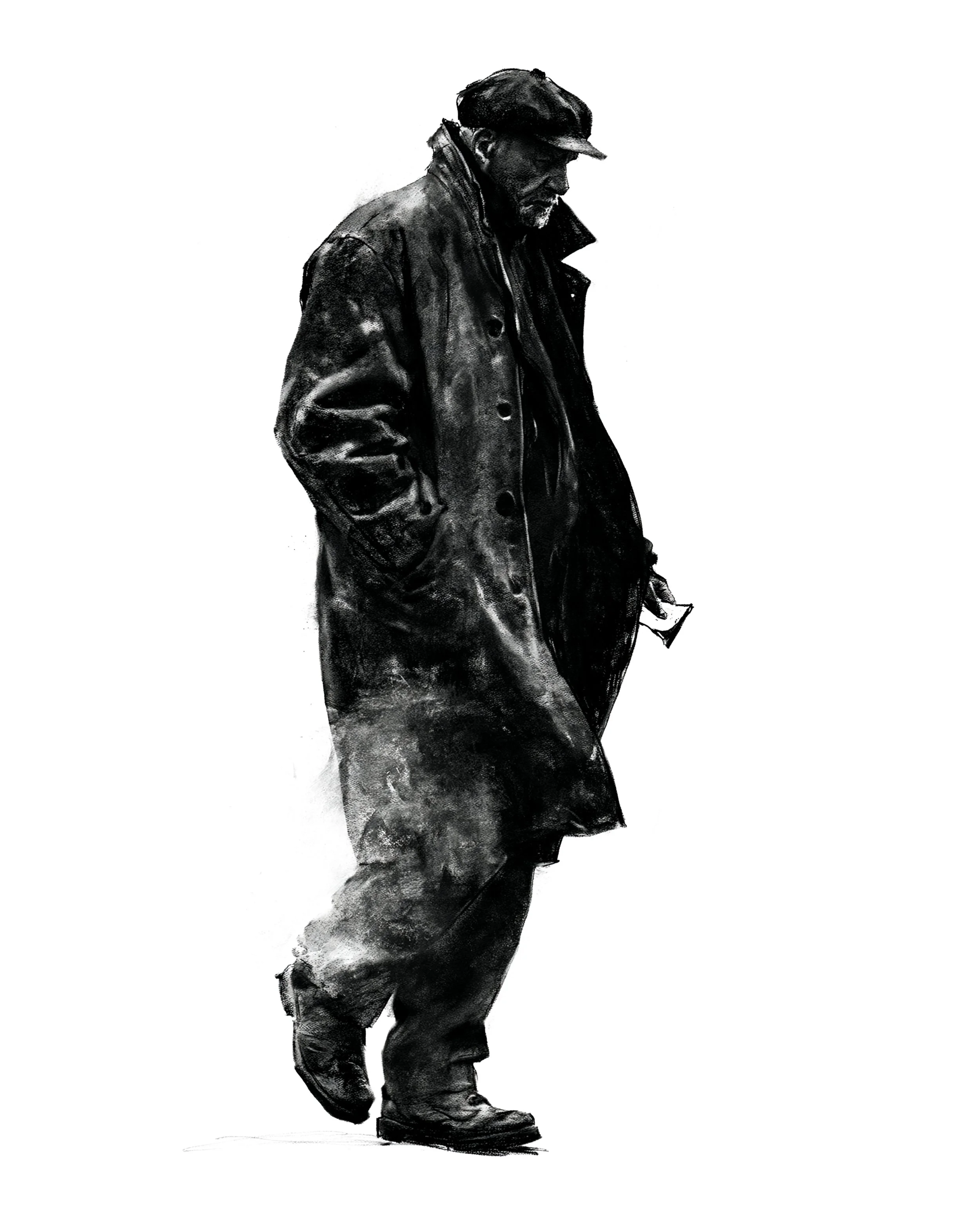
TELL LINDA
Winter in Saint Cloud never knocks.
It doesn’t leave a note on the door or politely ask if you have a minute to chat.
It actually has no respect for private property at all.
It just breaks down your doors, eats the last slice of warm pie,
and sleeps sideways across the bed with one blue foot shoved against your spine.
By February, the snowbanks along Division Street have turned the color of old receipts,
and the wind comes off the Mississippi whispering,
“It wouldn’t be so bad if you dressed for it”
which is how Minnesotans describe both third-degree frostbite
and a 40-year marriage sustained entirely
by neither person wanting to move a hide-a-bed in January.
For a city named after heaven,
Saint Cloud in the winter feels like God’s unheated detached garage.
That is how the frost bullied me into a thrift store three Januaries ago.
I was looking for a coat sturdy enough to convince the land that I had finally learned my lesson.
The store smelled like cedar, dust, and every basement that has ever kept a a family secret.
Under the fluorescent lights, the abandoned things waited to be chosen again:
a waffle iron with no cord,
three porcelain angels missing the same wing yet remaining professionally optimistic,
a bowling trophy engraved to Dale, who, in 1987, apparently gave everything he had,
and 7 copies of The Purpose-Driven Life, which suggested purpose had a surprisingly high return rate.
And then I saw the coat.
Brown wool. Heavy shoulders.
The kind of coat worn by a man who knew how to jump-start a Buick in a blizzard,
fillet a walleye in 3 quick strokes,
and stand in a garage for 40 minutes staring at a pegboard
without ever explaining why.
It didn’t look abandoned; it looked bereaved.
It carried the grave, patient dignity of an old hound sitting by the driveway,
too loyal to realize the truck isn't coming back.
When I slipped it on, the sleeves stopped exactly at my wrists.
His silhouette laid itself over mine as gently as a blessing
and as heavy as a ghost.
“Belonged to a dead guy,” the wrinkled cashier drawled, like death was just another brand name.
“Wife dropped it off last Tuesday. Along with five boxes of flannels, two pairs of Red Wings, and a Folgers can full of rusty nails.”
She squinted at the collar. “Said he kept everything. Well—everything except his pulse, I guess.”
We both laughed. Not because it was funny.
But because sometimes grief leaves a banana peel in the middle of the room,
and what else can the living do but slip?
I slid my hands into the pockets.
In the right one: a peppermint wearing a tiny sweater of lint,
waiting with the patience of something that doesn’t know
that the mouth it was promised has closed for good.
I imagined him saving it after dinner at a restaurant—
the kind where the waitress calls everyone “hon,”
the coffee tastes faintly of pennies,
and the mints wait by the register in a glass bowl like complimentary medicine.
In the left pocket: one drywall screw. Naturally.
Every Minnesota Man eventually evolves into a walking Ace Hardware.
We were raised to know that at some point somewhere there will be a
loose hinge, a shelf that sags, or a picture of the grandbabes
that leans slightly toward Indiana.
Underneath the screw, folded twice and softened by the friction of work-worn hands:
a scrap of lined paper with handwriting that was blocky,
like it was written on the hood of an idling Ford.
It read:
MILK
BREAD
TELL LINDA
Like I already said, this was years ago now, but I still wonder if Linda ever got told.
Tell Linda—what?
That the doctor called? That the pain had returned? That the money was gone?
That the porch light flickers because he never fixed the wiring,
and not because her mom was trying to say she was sorry?
That after 37 years of burnt toast and silent suppers,
he still adored the way she sang the wrong words to “Dreams” by Fleetwood Mac
which somehow made it right?
Tell Linda he broke her blue bowl and blamed the cat?
Tell Linda the fishing trip was never about fishing?
Tell Linda the first time he saw her in the church-basement kitchen,
holding a paper plate beneath a collapsing piece of cake,
something inside him recognized home before he did?
Tell Linda he heard her crying in the shower the night their son moved away,
and stood outside the bathroom holding two cups of coffee
because he did not know how to enter sorrow without knocking something over?
Tell Linda he was sorry?
Tell Linda he was scared?
Tell Linda he had loved her every single morning of their life,
even on the long, quiet days when he was completely useless at showing it?
Did he ever get to tell her?
Or did his heart fail on the black ice outside of St. Joseph?
Did his breath catch in his chest before the sentence could make it past his teeth?
Did he die with the words still pinned in his pocket between the sugar and the steel,
carrying the secret into the frozen earth while Linda stood by the window,
watching the cardinals at the feeder,
waiting for the sound of a truck engine that would never turn into the drive?
The dead are careless with unfinished sentences.
They hoard the nouns and abandon the verbs: tell, remember, forgive, stay.
I don’t know. But I did take the coat, and left the relics untouched.
It was the entire archaeology of a man:
One sweetness he never gave away.
One repair he never got to make.
One truth he never got to say.
When I got home that night, I pulled the note out again under a better light.
That’s when I saw it.
MILK and BREAD were actually struck through with a thick, dull blue ballpoint pen.
“TELL LINDA”, however, was not.
He had already taken care of what feeds the flesh.
He was holding onto what sustains the heart.
So Linda — wherever grief has made a country of you —
think of this poem as a stranger pulling into your driveway,
the headlights briefly filling the rooms he no longer walks through.
I do not know what your beloved meant to tell you.
I looked in every pocket and I couldn’t find the words.
But I did find this:
There’s a peppermint insisting there was still sweetness ahead.
There’s a screw that believes nothing broken is beyond repair.
And a list containing milk and bread, evidence that he expected the morning.
At the bottom though, un-cancelled and eternal, there was you: TELL LINDA.
Which might’ve been the whole message.
Maybe there are no other words on purpose.
Tell Linda she was remembered.
Tell Linda she was the final unfinished business of an ordinary day.
Tell Linda that while buying what the body requires,
he remembered in all caps what the soul needs.
Tell Linda that death did not find him with an empty chest.
It emptied his lungs, his house, his side of the bed,
but it could not empty his pockets of her.
Maybe this is the most any of us can really hope for:
that when the great forgetting comes,
someone’s name will remain uncrossed inside us.
Someone will be the errand our heart was still running.
Someone will be the sentence death interrupted but could not end.
Anyways, this poem is me crossing out the final line.
TELL LINDA
Charcoal and Ink on Canvas
16×20
2026